
Our story · 温度 おんど
Ondo means temperature.
Three temperatures make every cup: the warmth of the hands that shape it, the heat of the kiln that seals it, and the warmth it brings to yours.
I · The maker's hands
Temperature begins with the maker.
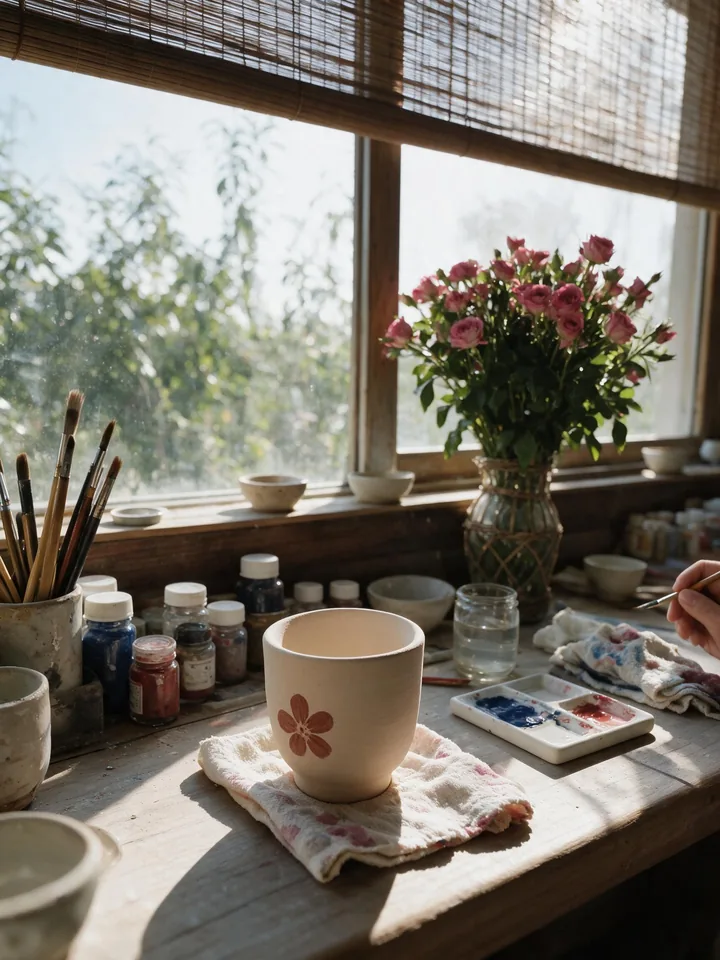
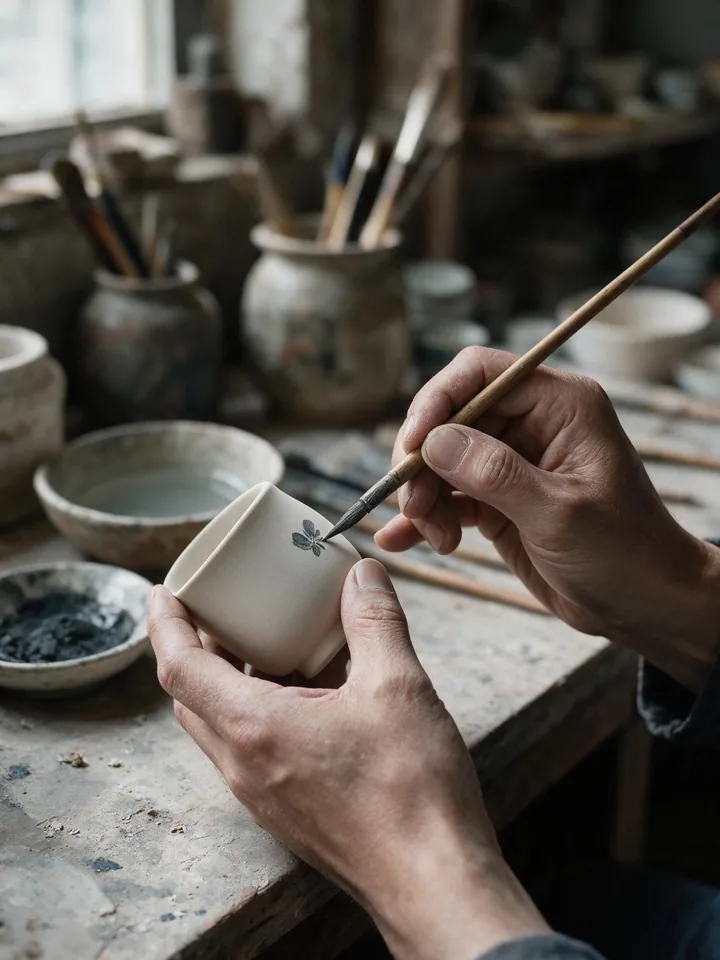
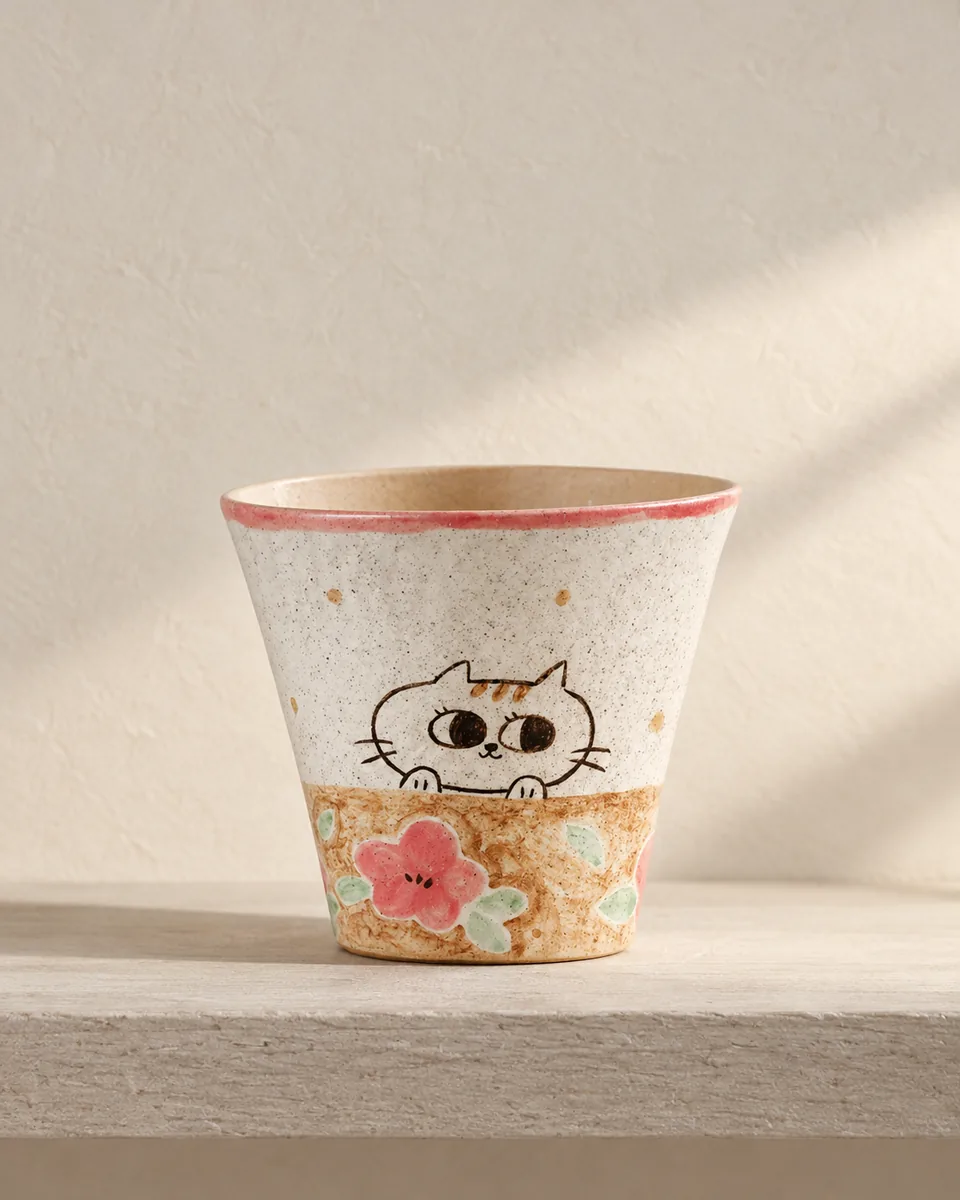
In small studios, clay is shaped and trimmed by hand, and often painted one stroke at a time, under the glaze.
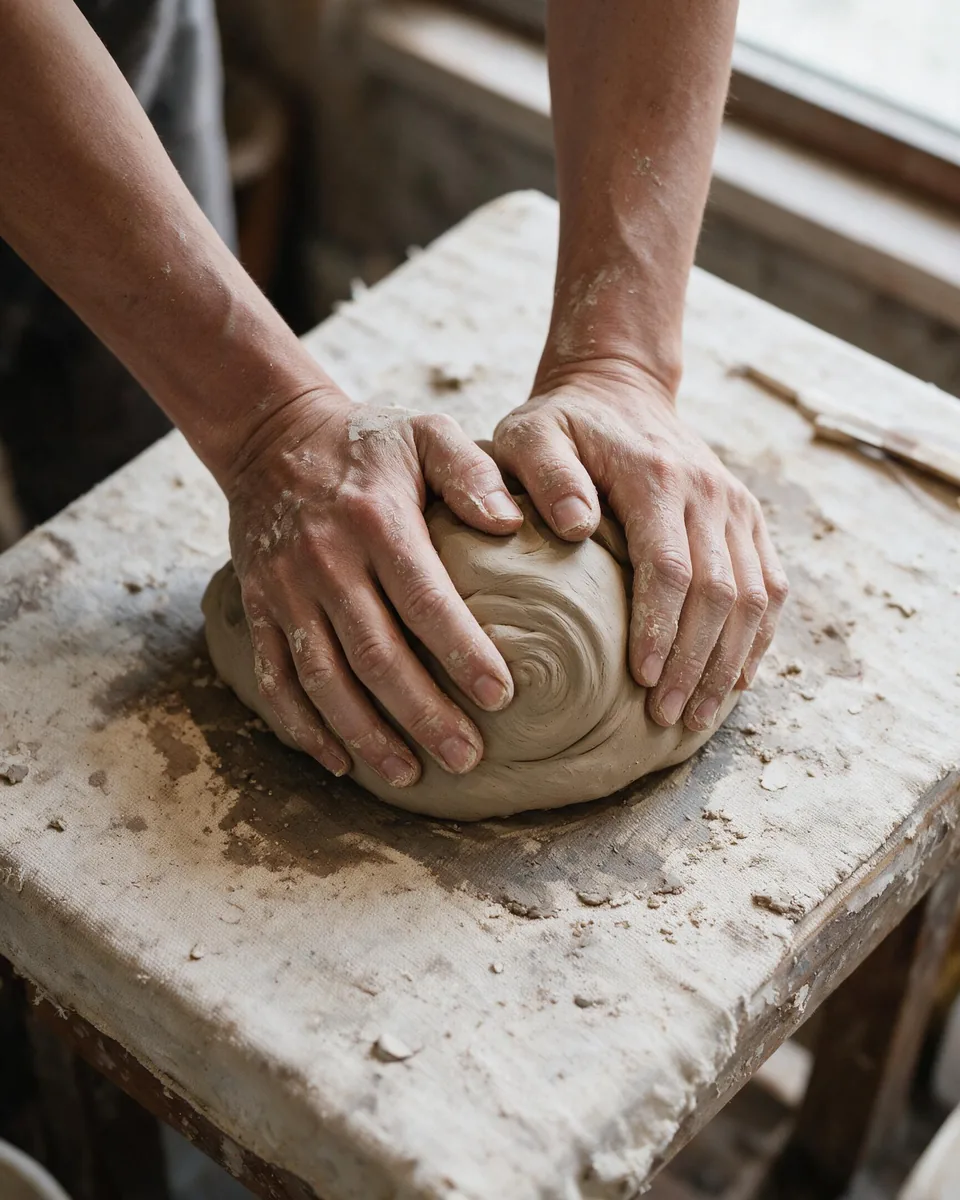
01Wedged until no air is left in the clay
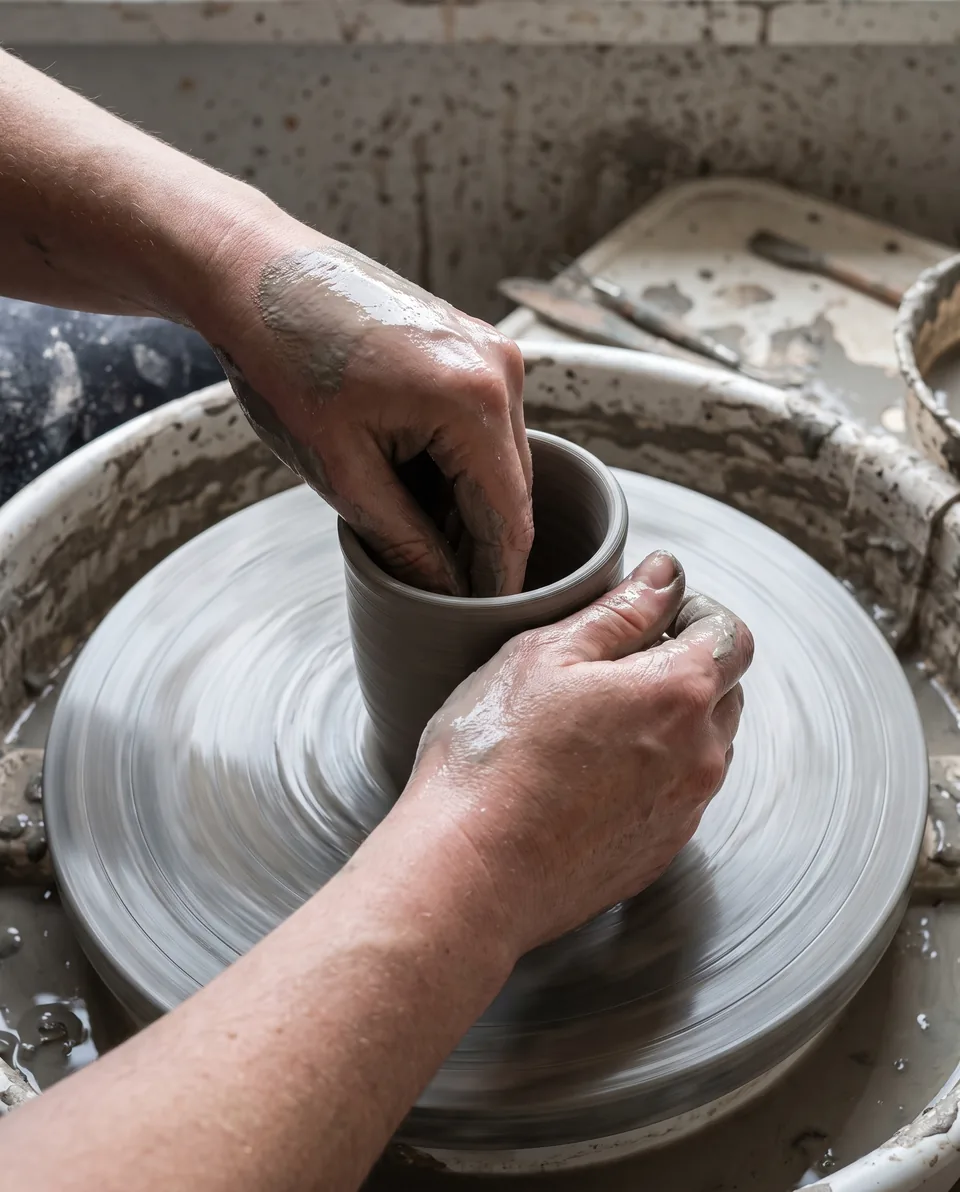
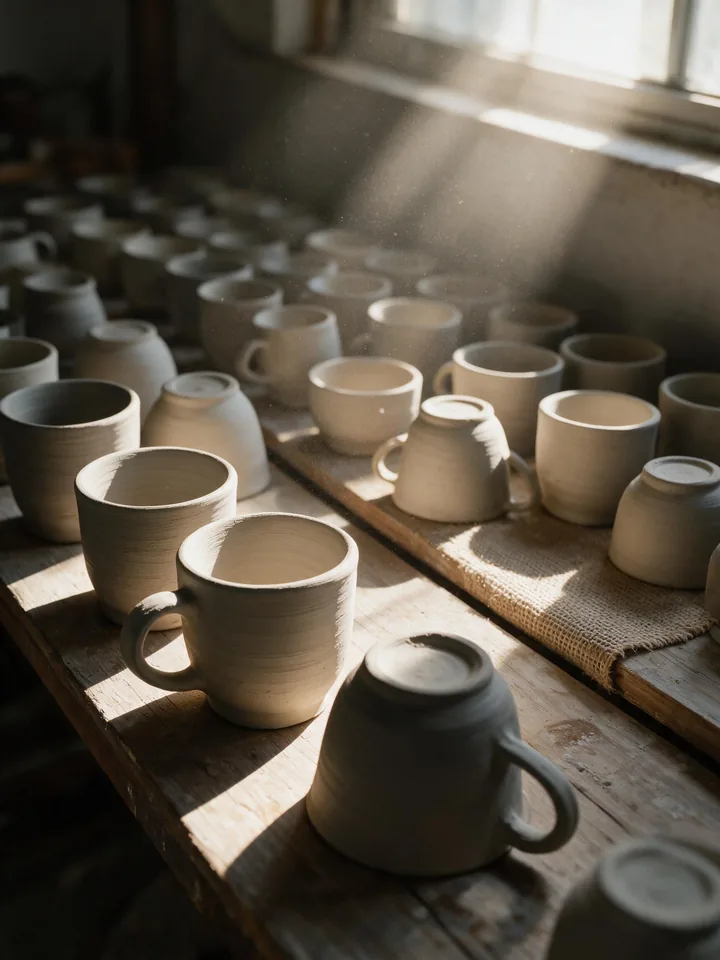
02Thrown on the wheel
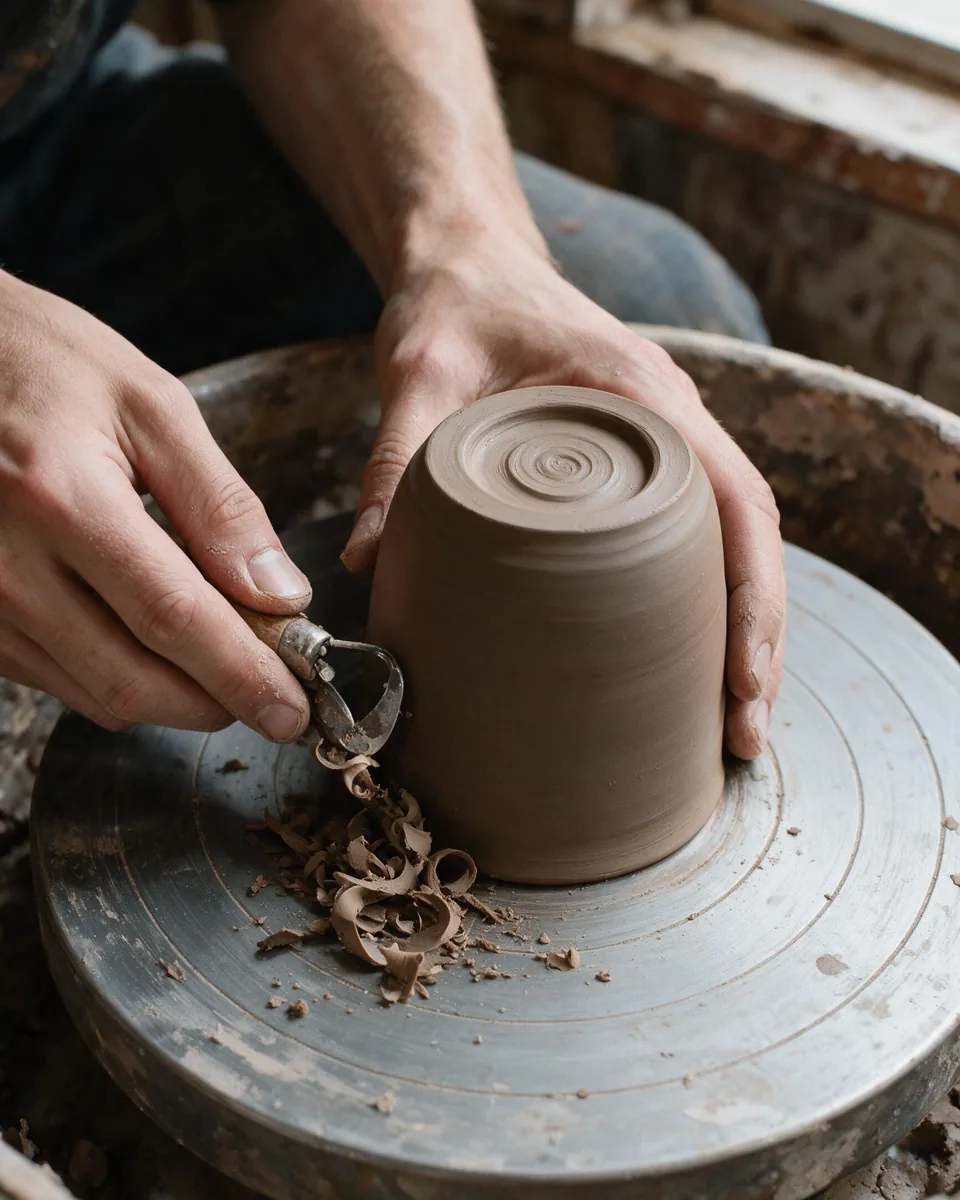
03Trimmed when leather-hard
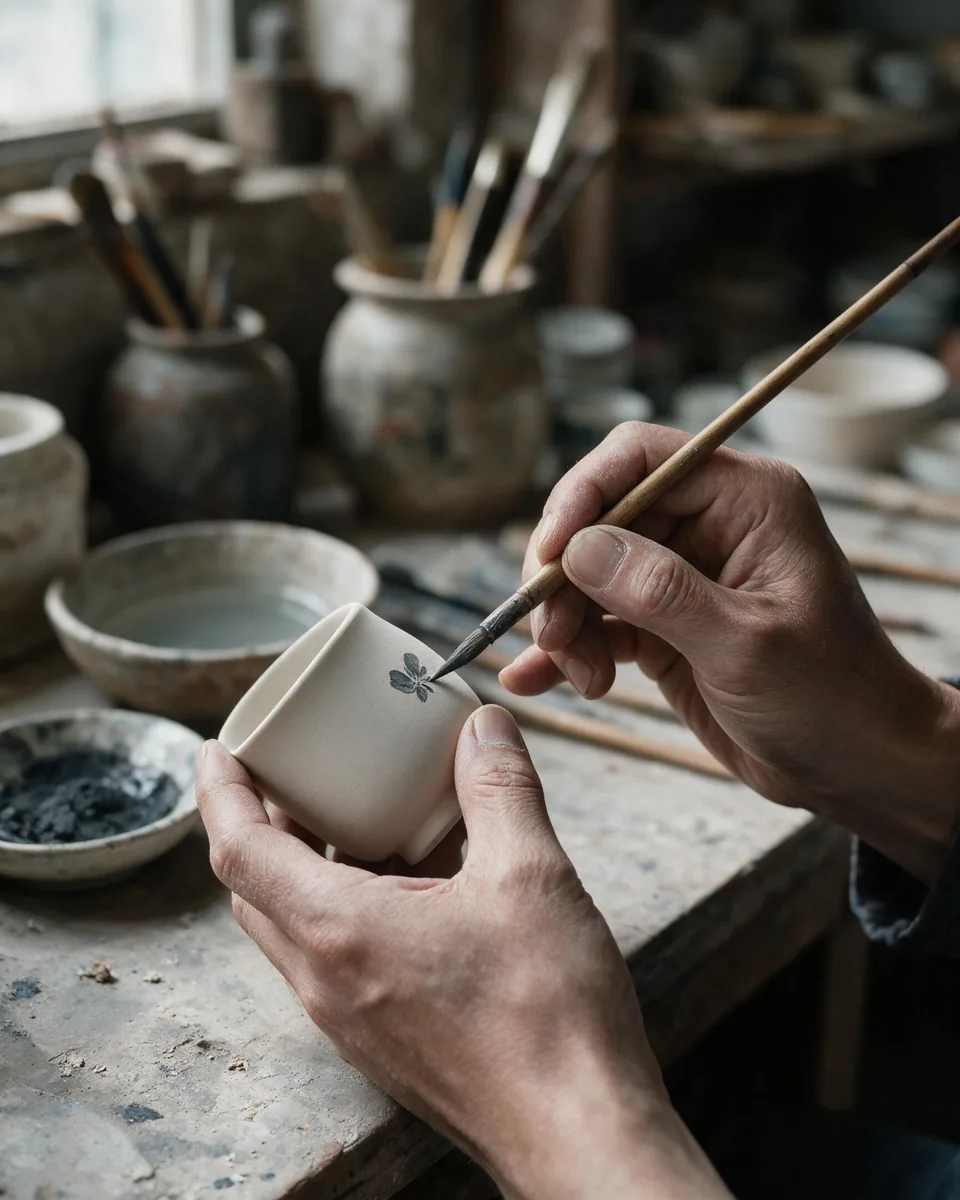
04Painted freehand, under the glaze
II · The mouth of the kiln
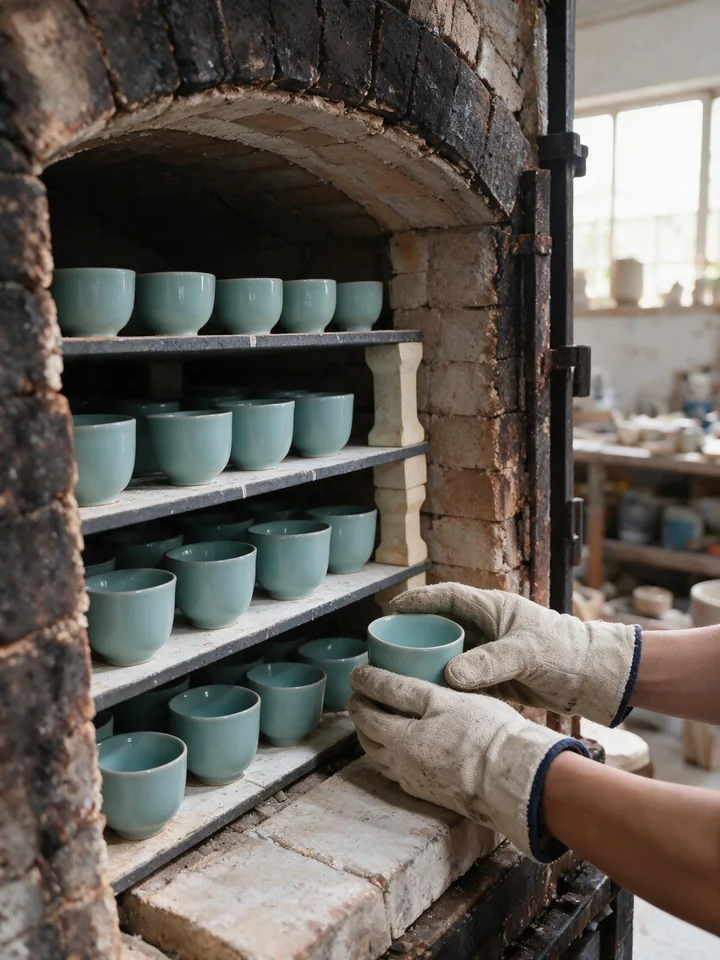
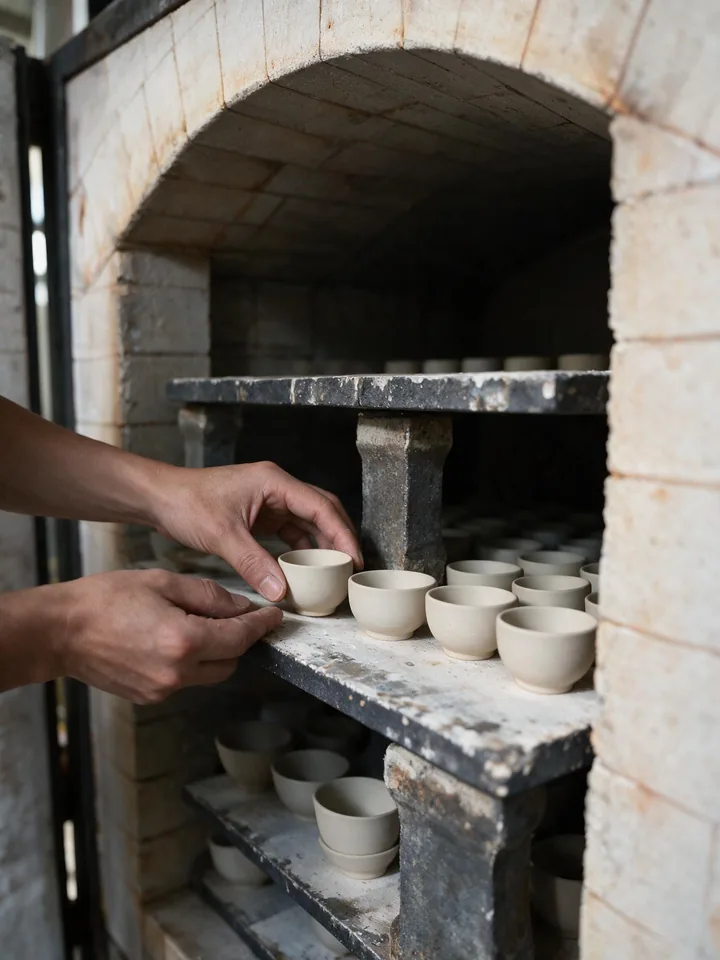
Then it goes into the fire.
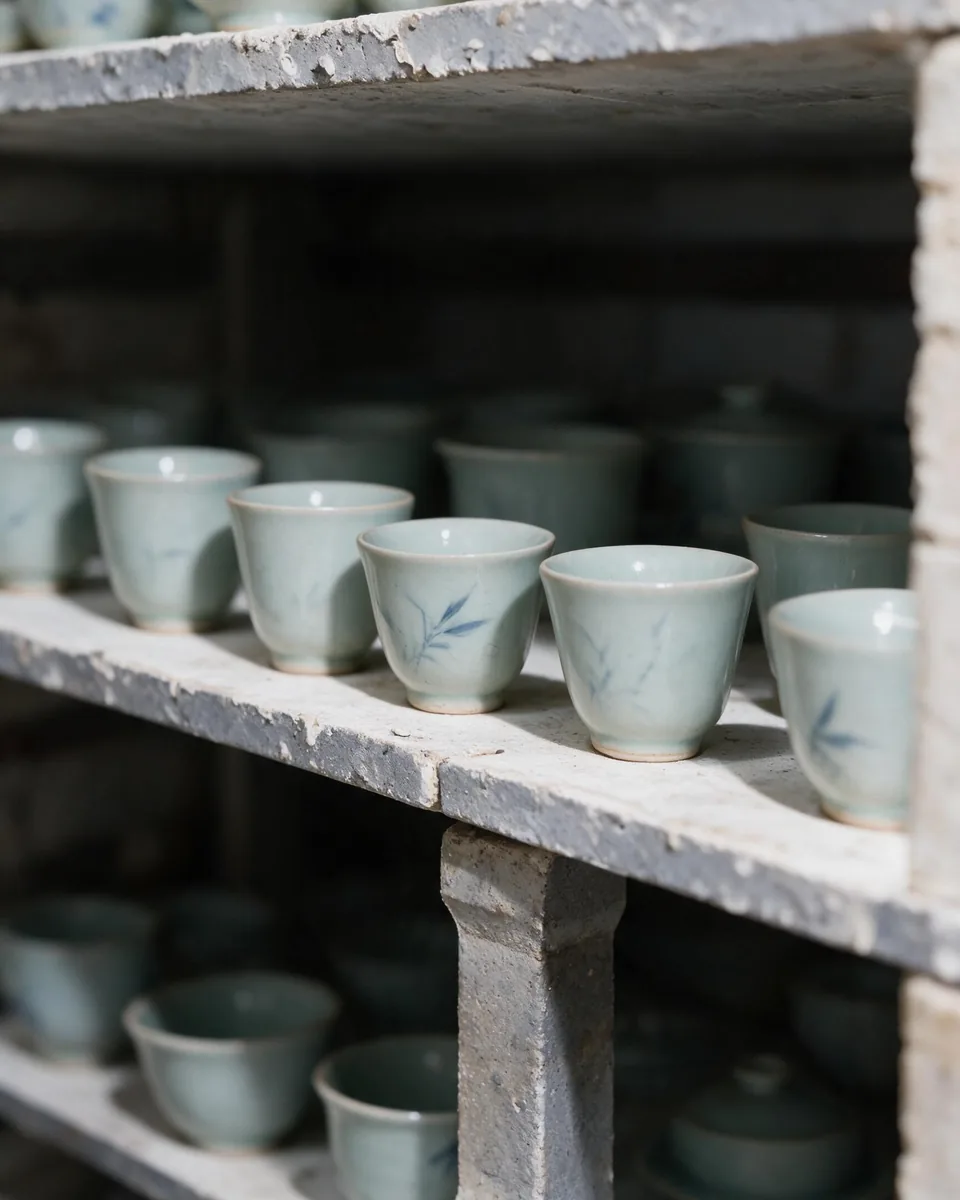
The pale pieces go into the kiln. It climbs to about 1300°C, and for the folded porcelain cups to 1380°C; the glaze melts into glass, and the painting is sealed beneath it for good. Japanese potters have a word, yōhen, for the colors only the fire decides.
- A first firing hardens the clay
- Glaze, then about 1300°C
- A slow cool before the door opens
III · Your hands
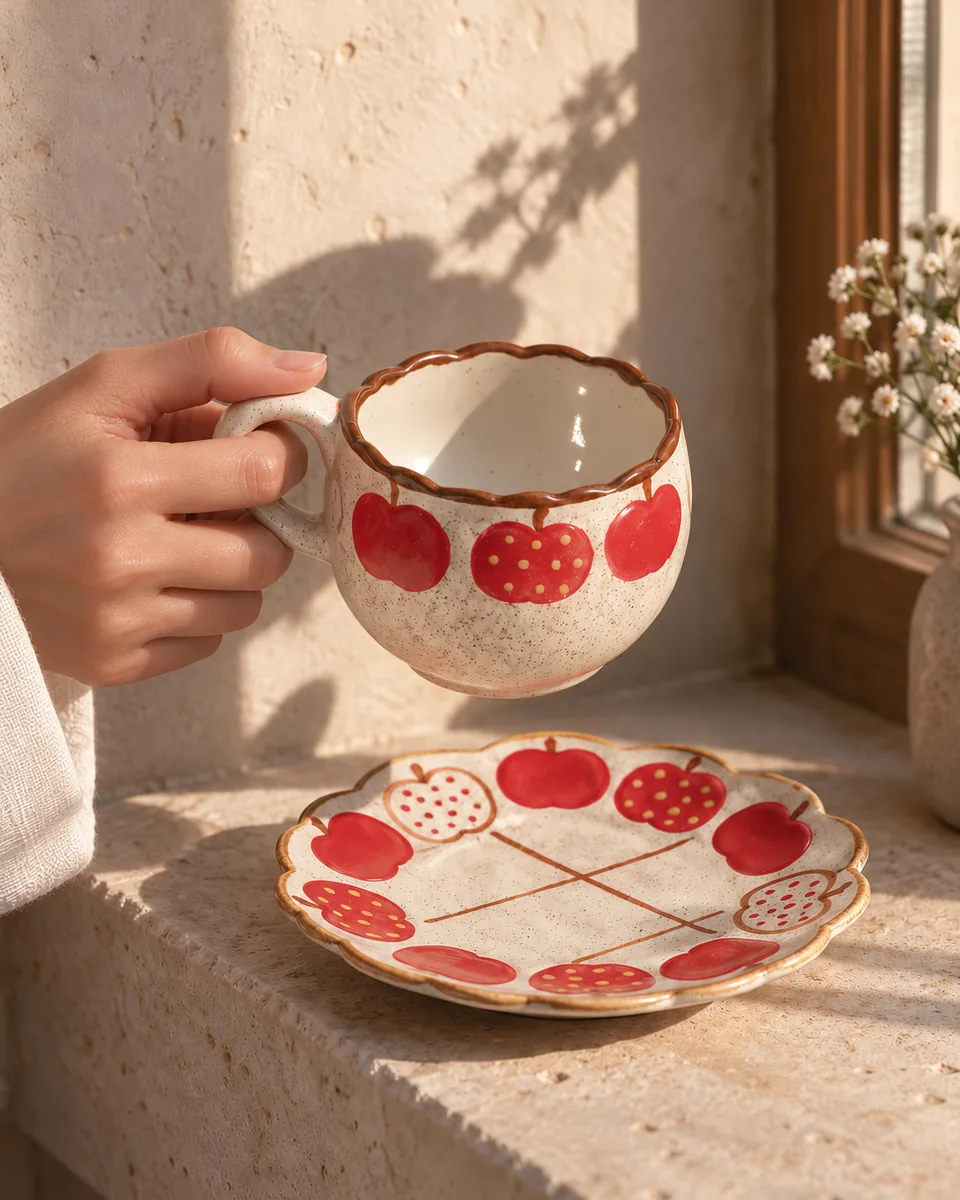
And it ends in your hands.
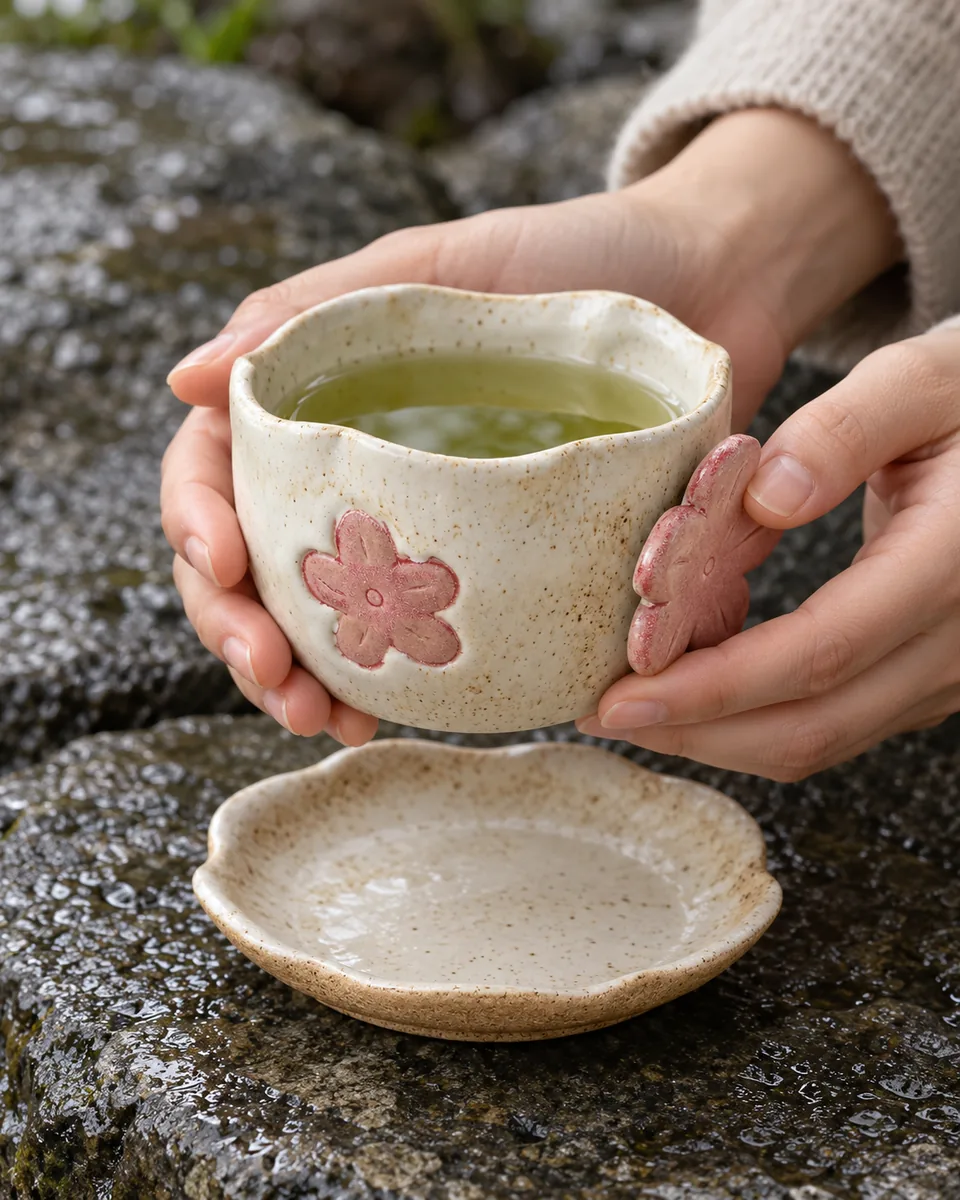
One morning it holds a coffee or a tea at about 70°C, and passes the warmth on.
- Black coffee, tea, or a slow latte
- Washed by hand
- Kept for years
The name
The heat of the kiln, and the warmth of a cup in your hands.

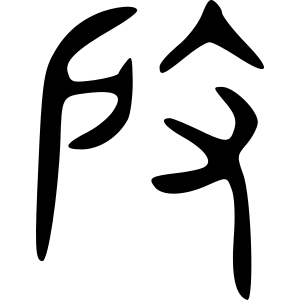 Oracle bone

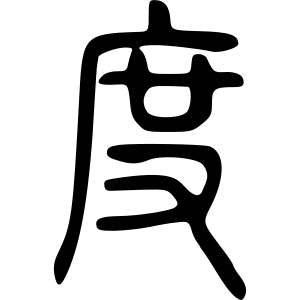 Seal
- 温度おんどJapanese
- 溫度Chinese
- 온도Korean
皿a vessel

1200 BC

1000–300 BC

200 BC
+ warm water
溫warmth


Three oracle bone forms of 溫, 1200 BC
皿 is a vessel, drawn this way since the oracle bone script. Each of the three oracle bone forms of 溫 stands on it, with warm water and its drops rising in the middle. 溫 is warmth, the first half of our name.
過手七十二 · Tiangong Kaiwu, 1637
A piece of porcelain passes through seventy-two hands before it is done.
Many of our cups are shaped and painted by hand in small studios, one piece at a time.
Shop the cups